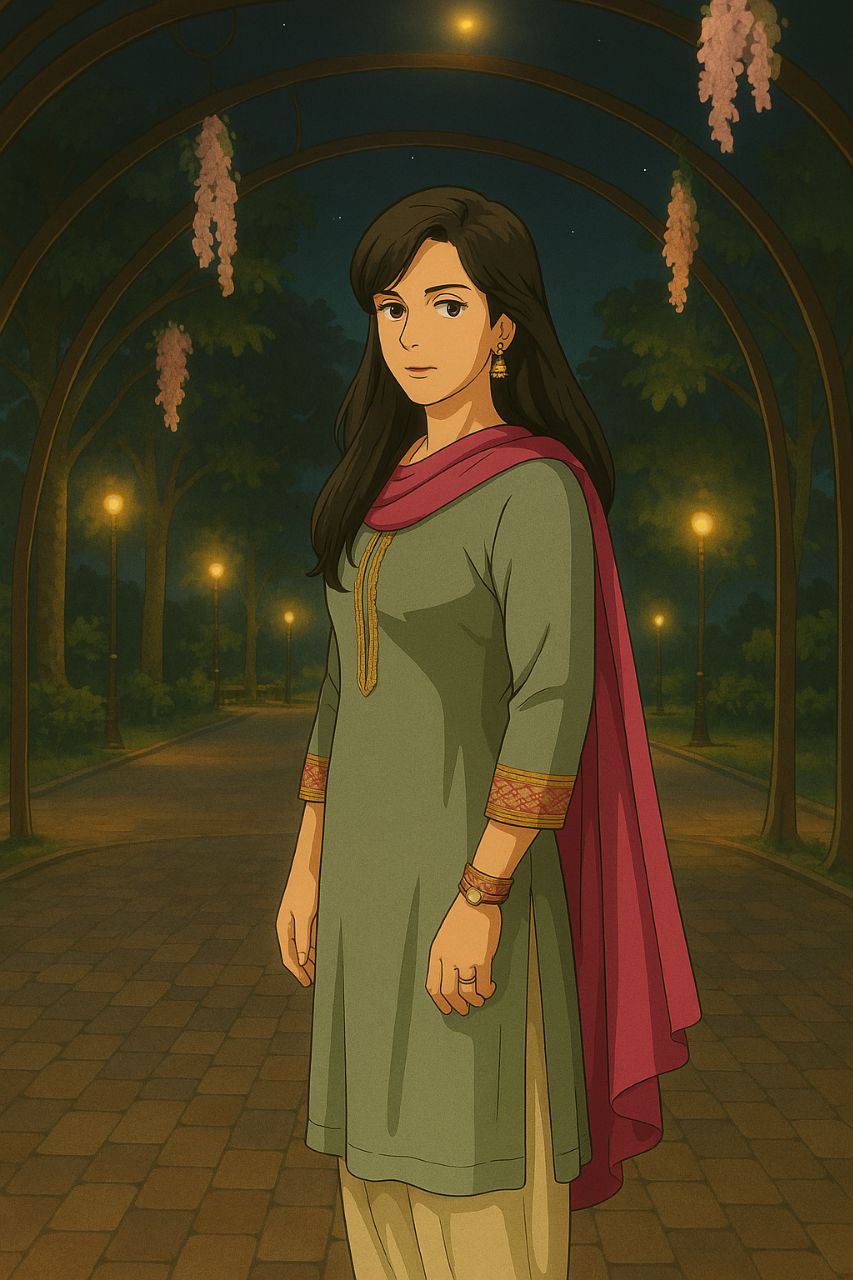
Part 2: Upgrade to Sarees
After five months of disciplined routine, Vansh’s hair had grown healthy, smooth, and shiny, free of the roughness and dandruff that had once plagued him. His mother, Vinita, watched him carefully one morning as he tied his ponytail, adjusted bangles, and draped his dupatta over his shoulders. “Vansh,” she said, a small smile on her lips, “you have done very well. You are ready for the next stage.”
Vansh looked at her curiously. “Next stage, Maa?” he asked.
“Yes,” she said. “For at least three days a week, you will wear sarees. Your hair will have new styles, and you will continue with the household chores. The kurti days remain for four days a week. We will rotate hairstyles so you can learn all the techniques: bun, braid, and puff with open hair.” Vansh swallowed nervously, imagining the heaviness of a saree, the pins, and the adjustments he would have to make. Still, he nodded. He had grown accustomed to following his mother’s instructions, and he trusted her judgment.
The first saree day arrived. Vinita selected a purple saree with a golden blouse. Vansh’s heart raced as he unfolded the saree. The fabric was heavy, shimmering, and unfamiliar. His mother guided him gently. “Vansh, stand straight. First, step into the petticoat, tie it firmly around your waist. Make sure it is secure; it will support the saree.”
He followed her instructions carefully, feeling the tightness around his waist. Next, she took the saree’s end and tucked it into the petticoat at the right side. She draped the pleats meticulously. Vansh tried to imitate her, but his hands faltered. “No, hold it tighter here,” she corrected. The pleats were secured with thirty pins, a heavy layer of metal pressing against the fabric and his waist. Vansh winced slightly at the weight, but he remained patient.
“Now the pallu,” Vinita said, draping it over his shoulder. Vansh felt the additional heaviness, the silky fabric brushing against his arm. “Hold it neatly, or it will fall,” she instructed. Vansh adjusted it carefully, feeling the new texture against his kurti-like blouse.
Hair styling followed. For the first saree day, Vinita chose a tight braid. She shampooed his hair the previous night, leaving it soft and shiny. Now, she combed it, carefully removing tangles. “Vansh, sit still. This braid must be tight; it will stay throughout the day.” Vansh obeyed silently, feeling the pull at his scalp as each section of hair was woven into a braid. The braid grew heavier with each lock added, a solid rope of hair that rested over his shoulder. Though it tugged at the scalp and caused a strange discomfort at the nape of his neck, Vansh remained still, knowing the importance of patience.
Once the braid was complete, Vinita replaced his male studs with jhumkas, adjusted bangles on each wrist, and carefully pinned the dupatta over his shoulder, securing it against the blouse. Vansh noticed the combined weight of the accessories, braid, and saree. He shifted slightly, feeling the pull at his waist and shoulders. “You will get used to it,” Vinita reassured him, “but you must learn to walk, sit, and move carefully.”
Vansh practiced walking around the living room. The pleats felt heavy, the pallu brushed against his arm, and the braid tugged at his scalp. “Straighten your back, Vansh. Imagine a line from your head to your heels,” Vinita instructed. Each step required mindfulness. Vansh stumbled slightly but corrected his posture, adjusting the pallu and pleats with careful hands. Walking, he realized, was unlike anything he had experienced in kurtis or leggings. Each movement needed awareness; the saree could slip, the pins could catch, and the braid tugged at his scalp if he moved too quickly.
Sitting was another challenge. “Keep the pleats neat and cross your legs carefully,” Vinita said. Vansh learned to fold his legs gently, letting the fabric drape naturally. The braid fell over his shoulder, the weight reminding him to sit upright. The bangles jingled lightly as he moved his hands, and the jhumkas swayed with every tilt of his head. Dupatta pins pressed slightly against his shoulder, but he tolerated it, focusing on maintaining balance.
Household chores now demanded even more coordination. Washing dishes required careful bending to prevent the pallu from slipping. Dusting shelves meant lifting arms slowly, aware of the bangles’ clinking and the braid’s weight. Folding laundry and peeling vegetables became exercises in patience, each movement deliberate to keep the saree in place and hair intact. Vansh found himself more conscious of posture, movements, and careful attention to accessories than ever before. His mother observed silently, only giving occasional instructions when necessary.
The next kurti day returned to the familiar routine: ponytail, leggings, and bangles. Vansh appreciated the relief of lighter clothing and easier movement. Yet, he noticed the contrast sharply: kurtis felt easier, breezier, and the hair tied in a ponytail was lighter on his neck. These small differences reinforced his understanding of the saree’s weight and the skill required to carry it gracefully.
Over the following week, Vansh rotated his saree days and hairstyles:
Day 1: Braid with purple saree and golden blouse.
Day 2 (kurti day): Loose ponytail, pink leggings, yellow kurti, bangles.
Day 3 (kurti day): Another ponytail with lavender kurti, leggings, bangles.
Day 4 (saree day): Hair in a puff and open hair, light blue saree, golden blouse. The puff added volume to the hair, slightly uncomfortable at the crown, but Vansh adapted.
Day 5 (kurti day): Tight ponytail, green kurti, leggings.
Day 6 (saree day): Hair tied in a bun, orange saree, red blouse. The bun at the back caused a strange weight on his head and minor tension on the scalp, but he endured.
Day 7 (kurti day): Loose braid, pink kurti, leggings, bangles.
Each rotation taught him new techniques: walking, sitting, bending, and moving with saree and accessories. Vinita supervised the first few days closely, showing him how to manage the pallu, adjust the braid or bun, and maintain posture. Vansh learned quickly, correcting mistakes, and by the end of two weeks, he could drape a saree and manage his hair without constant supervision.
Accessories became part of the routine. Bangles clinked softly, the jhumkas swayed with each step, and pins held the pallu firmly. Vansh added payals on saree days, their gentle tinkling joining the sound of bangles and jhumkas. Dupatta pins pressed slightly on his shoulder, and each hairstyle brought a different weight: braids were heavy but comfortable once adjusted, buns caused tension at the crown, and puffed open hair required careful balancing.
Vansh discovered that the saree, though heavy, allowed a certain elegance in movement. Each chore—dusting, folding laundry, washing dishes, peeling vegetables—required mindfulness. Every step had to consider the pleats, the pallu, the weight of hair, and accessories. Initially, it was uncomfortable; the braid tugged, pins pressed, bangles jingled, and the waistband of the petticoat pinched slightly. But gradually, Vansh learned to move smoothly, adjusting movements, balancing the weight, and coordinating arms, hands, and head.
At night, after changing into casual clothes, Vansh looked at his reflection. The purple, blue, and orange sarees were no longer intimidating. His hair, shiny and healthy, fell smoothly into braids, buns, or puffed styles. Bangles and jhumkas had become familiar, comfortable in their jingling rhythm. Dupatta pins, once a minor annoyance, now held the fabric elegantly. The weight of the saree and hairstyle, though noticeable, had become manageable.
Vinita observed him proudly. “Vansh,” she said one evening, “you have learned quickly. Sarees, hair, accessories… you manage them well. Your discipline and care show.” Vansh smiled, understanding that the discomfort he had felt at first had taught him patience, coordination, and pride. The transition from kurtis to sarees had been challenging, yet the routine had transformed him into someone capable of grace, poise, and confidence, even in unfamiliar attire.
Over the following weeks, Vansh continued the rotation. Each saree day added mastery: he could drape pleats without assistance, style his hair into braids, buns, or puffed open hair, and maintain balance and elegance while performing chores. Kurti days provided relief, a chance to rest from the weight, and reinforced the difference between light and heavy attire. Hair care remained meticulous: oiling, shampooing, conditioning, and careful combing ensured that each hairstyle stayed smooth, shiny, and healthy.
Household chores remained an essential part of the routine, not diminished by the sarees. Washing dishes, dusting, folding laundry, and peeling vegetables required awareness of clothing and hair. Vansh moved carefully, balancing elegance with efficiency, until each action became second nature.
By the end of the first month of saree days, Vansh had gained confidence. The initial discomfort—tight pleats, heavy braid, tense bun, pin pressure—had diminished. Walking, sitting, and moving in sarees became natural. Hair was shiny, healthy, and long, now reaching mid-back. Bangles jingled harmoniously, jhumkas swayed lightly, payals added gentle rhythm, and dupatta pins held firmly. Vansh had embraced the routine fully, mastering the balance between clothing, hairstyle, and daily life, ready for the next stage of continued practice and long-term adaptation.
Discussion (0)